Water Damage Cleanup
Water Damage Cleanup in Bellevue, WA
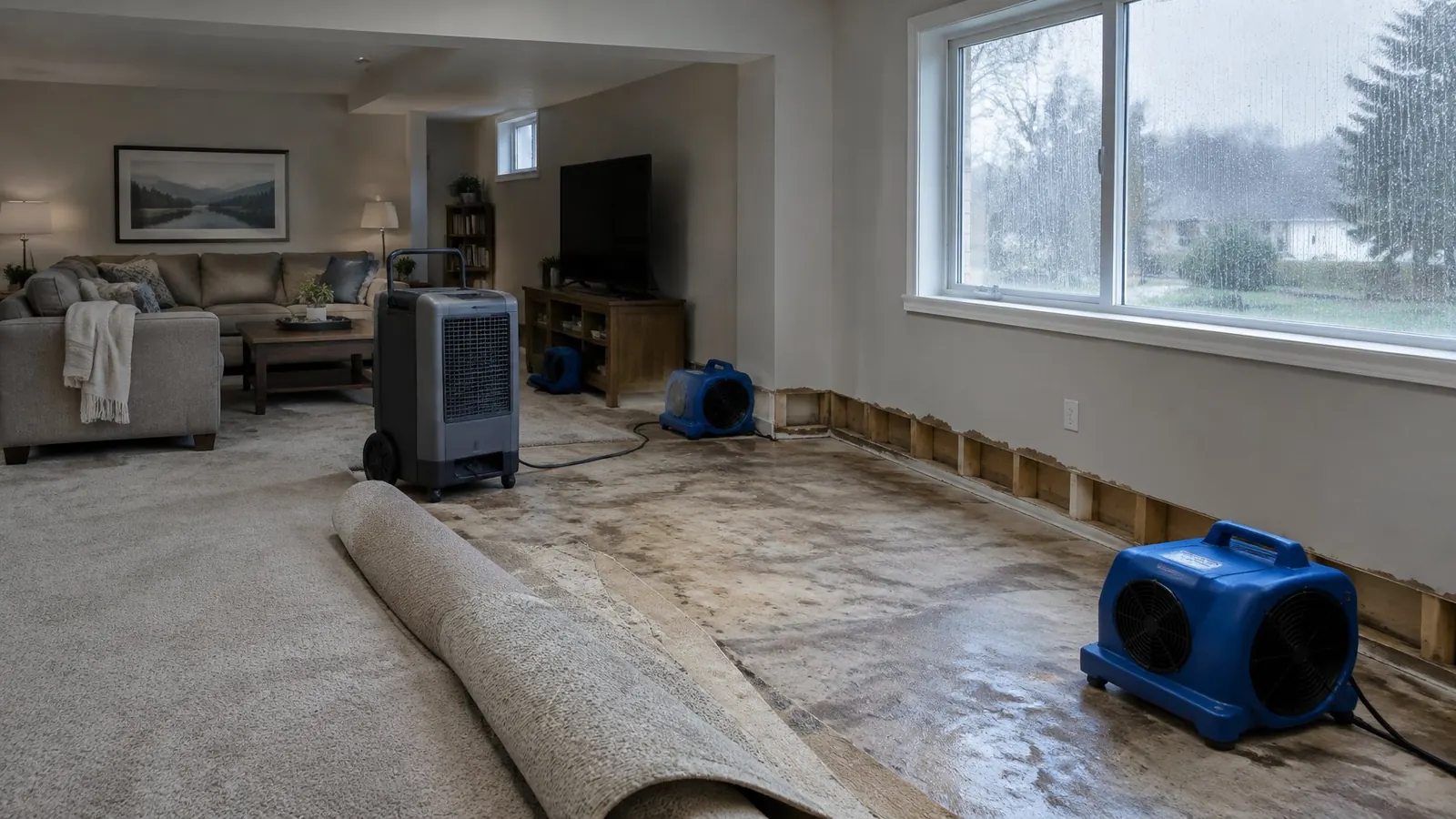
What a good dry-out looks like
Most of the water you can see comes out in the first visit, with pumps and extractors. The rest is in the materials: carpet pad, drywall, subfloor and framing. Drying it means running air movers and dehumidifiers for days and checking moisture with meters until each material is back to a normal reading.
Ask for that moisture log. It's how you know a wall is dry rather than just looking dry, and it's the record of what was wet if anyone asks later. Materials that can't be dried in time, or that were soaked by contaminated water, are cut out and replaced.
Questions worth asking
- What's coming out, and why?
- Pad, baseboards and the bottom of the drywall are common. Get the reason for each.
- How is dryness measured?
- Readings in the same spots every day, compared with dry areas of the house.
- Who does the rebuild?
- Some companies only dry; others also repair. Know which before work starts.
- Does any of it need a permit?
- In Bellevue, replacing a water heater does; swapping a fixture like-for-like doesn't (city FAQ).
How it works
Four steps, one phone call
Call
Tell whoever answers what happened, where the water or smoke came from and your ZIP code.
Connect
You're put through to an independent restoration contractor serving your part of the Eastside.
Assess
They inspect, measure moisture, explain what has to come out and give you their price.
Decide
Hire them or not. The agreement is between you and the contractor.
Questions
Common questions
How long does drying usually take?
Commonly three to five days of equipment for clean water in a typical room, longer for hardwood, plaster, lower levels or water that sat. The readings decide, not the calendar.
Can I just open the windows?
In damp Puget Sound weather, outside air often carries moisture in rather than out. Contractors usually keep the room closed so the dehumidifiers can work.
Is the equipment safe to leave running overnight?
It's designed to run continuously, and drying slows a lot if it's switched off. Keep cords clear of walkways and ask the contractor before turning anything off.
Also
Other kinds of damage
- Condo & Townhome LeaksWater through the ceiling from upstairs, or your leak reaching the unit below: what to do and who to tell.
- Broken & Frozen PipesA supply hose that let go or a pipe split in a cold snap: water off first, then extraction and drying.
- Rain & Storm FloodingOverflowing gutters, flooded window wells and water in the lower level after heavy rain.
- Crawl Space WaterStanding water, soaked insulation or a torn vapor barrier under the house: pumped, dried and checked.
- Sewage Backup CleanupSewage up through a floor drain, tub or toilet: contaminated materials out, surfaces cleaned and sanitized.
- Mold RemediationMold after a leak, in a crawl space or from condensation: moisture fixed, area contained, materials removed.
- Fire & Smoke DamageSoot, smoke odor and the water used to fight the fire: cleaned, deodorized, dried and repaired.
Water, smoke or mold
Get a restoration contractor on the phone
One call connects you with an independent contractor serving Bellevue, Kirkland, Redmond, Renton, Issaquah, Sammamish and Mercer Island. Say what happened, where the water came from and how long it's been wet.
Something wet that shouldn't be? Call now.
Your call goes to an independent restoration contractor that works in Bellevue and on the Eastside.
Call (425) 592-3275Calls may be recorded. Read the referral disclosure and privacy policy.