Crawl Space Water
Crawl Space Water in Bellevue, WA
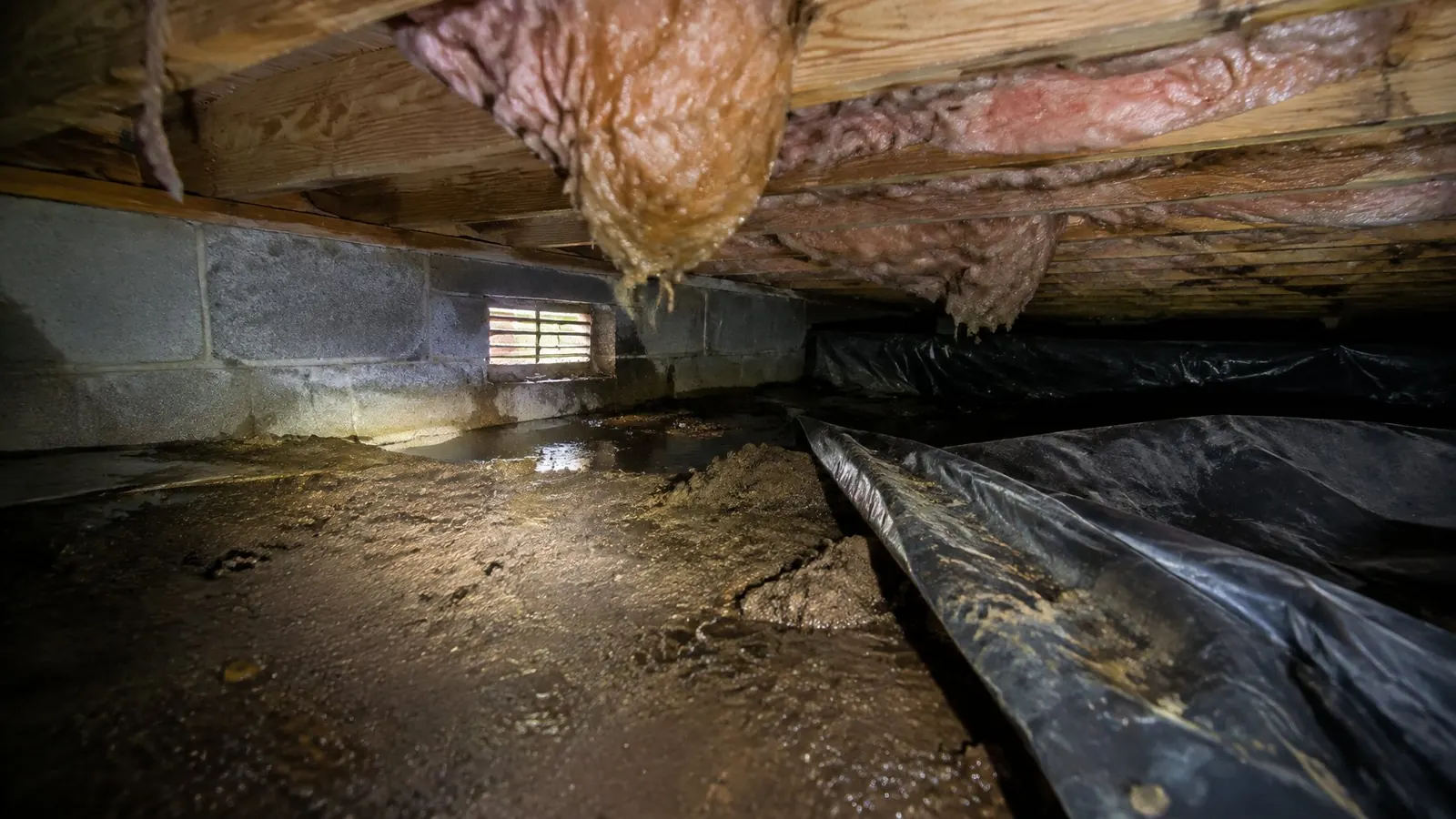
Out of sight, still your problem
Crawl spaces collect water from below (groundwater and runoff), from beside (gutters and grading that send water toward the foundation) and from above (a leaking supply line or drain under the floor). Because nobody goes down there, water can sit for weeks before a smell or a soft floor gives it away.
Drying a crawl space usually means pumping out standing water, removing insulation that's soaked or fallen, replacing the vapor barrier and running dehumidification until the framing reads dry. A contractor should also tell you where the water came from, because without fixing that it comes back.
What to check
- Where it came from
- A plumbing leak, a broken downspout, grading or groundwater. Each has a different fix.
- The insulation
- Wet batts between joists usually come out; they hold water against the wood.
- The vapor barrier
- Torn or missing plastic lets ground moisture up into the space.
- Ducts
- If heating ducts run through a wet crawl space, ask whether they need checking too.
How it works
Four steps, one phone call
Call
Tell whoever answers what happened, where the water or smoke came from and your ZIP code.
Connect
You're put through to an independent restoration contractor serving your part of the Eastside.
Assess
They inspect, measure moisture, explain what has to come out and give you their price.
Decide
Hire them or not. The agreement is between you and the contractor.
Questions
Common questions
Is some moisture in a crawl space normal?
Damp soil under a good vapor barrier is common in this climate. Standing water, wet insulation, condensation on framing or a strong musty smell are not.
Can mold grow in a wet crawl space?
Yes. The EPA advises drying water-damaged areas within 24 to 48 hours to prevent mold (EPA). See mold remediation.
Who installs a sump pump or drainage?
A drainage or waterproofing contractor, sometimes a plumber. Some restoration companies can refer you.
Also
Other kinds of damage
- Water Damage CleanupLeaks, overflows and failed appliances: water out, materials dried and checked, damage repaired.
- Condo & Townhome LeaksWater through the ceiling from upstairs, or your leak reaching the unit below: what to do and who to tell.
- Broken & Frozen PipesA supply hose that let go or a pipe split in a cold snap: water off first, then extraction and drying.
- Rain & Storm FloodingOverflowing gutters, flooded window wells and water in the lower level after heavy rain.
- Sewage Backup CleanupSewage up through a floor drain, tub or toilet: contaminated materials out, surfaces cleaned and sanitized.
- Mold RemediationMold after a leak, in a crawl space or from condensation: moisture fixed, area contained, materials removed.
- Fire & Smoke DamageSoot, smoke odor and the water used to fight the fire: cleaned, deodorized, dried and repaired.
Water, smoke or mold
Get a restoration contractor on the phone
One call connects you with an independent contractor serving Bellevue, Kirkland, Redmond, Renton, Issaquah, Sammamish and Mercer Island. Say what happened, where the water came from and how long it's been wet.
Something wet that shouldn't be? Call now.
Your call goes to an independent restoration contractor that works in Bellevue and on the Eastside.
Call (425) 592-3275Calls may be recorded. Read the referral disclosure and privacy policy.